What Is VO2 Max? The Real Meaning, The Myths, and How To Actually Improve It
VO2 max is everywhere right now. Every fitness influencer is flexing their number. Every coach and watch company is pushing it like it’s the ultimate indicator of health. And every social media algorithm is feeding people “how to improve VO2 max fast” hacks that sound great but fall apart under real science.
The truth?
VO2 max is important, but it’s wildly misunderstood.
This article breaks down what VO2 max actually means, how it really works, why your wearable device gets it wrong, and what training methods actually improve it. If you want the most practical, evidence-based VO2 max explanation on the internet, you’re in the right place.
Let’s get into it.

Doing interval runs outside to improve my pace, stride, and running economy.
What Is VO2 Max?
VO2 max is the maximum amount of oxygen your body can use during intense exercise. It’s the ceiling of your aerobic engine and a major predictor of endurance performance.
People with higher VO2 max scores generally have:
Better cardiovascular efficiency
Stronger aerobic capacity
Improved athletic potential
But VO2 max doesn’t tell the whole story. A high number doesn’t automatically make you fast or fit. Running economy, threshold pace, technique, and muscular endurance all matter just as much.
That’s where most people get fooled. They chase the number instead of the fitness behind it.
What Actually Improves VO2 Max (Backed by Real Training Science)
To increase VO2 max, you need consistent, targeted aerobic training—not random “HIIT” workouts.
The most effective way is through smart interval training.
For longer intervals (like ten rounds of three minutes), the ideal intensity is ninety two to ninety eight percent of threshold. This is hard enough to push the system, but not so hard that you crash halfway through.
For ten minute intervals, run no harder than threshold. Slightly easier is often better.
And the sneaky truth?
Running at ninety five percent of threshold produces nearly the same aerobic benefit as one hundred percent with way less stress.
Rest periods should be about twenty five percent of your work duration. Example: for a ten minute interval, rest two and a half to three minutes.
If you follow this structure, your aerobic capacity will improve. If you don’t, you’re basically hoping for luck.
Do VO2 Max Gains Really Plateau After 6 to 8 Weeks?
This is one of the biggest fitness myths out there.
The reality: VO2 max does not truly plateau after a few weeks, but the gains slow down for a reason.
During the first six to eight weeks, your body ramps up high-intensity cellular adaptations like:
Mitochondrial efficiency
Enzyme activity
Lactate transport
Oxygen utilization
These changes happen fast, which is why beginners see big improvements quickly.
After that, progress relies on deeper physiological changes—things like heart remodeling and increased blood vessel density. These structural upgrades take months to years, not weeks.
So you don’t “plateau,” you simply shift into the long game where real endurance is built.
Why VO2 Max Depends on Your Training Modality
Here’s something people miss entirely.
Your VO2 max won’t be the same for every type of exercise.
A runner with a high VO2 max might test much lower on a bike.
A cyclist with big lab numbers might struggle on a treadmill VO2 test.
Why?
Different movement patterns stress different muscle groups and different limitations.
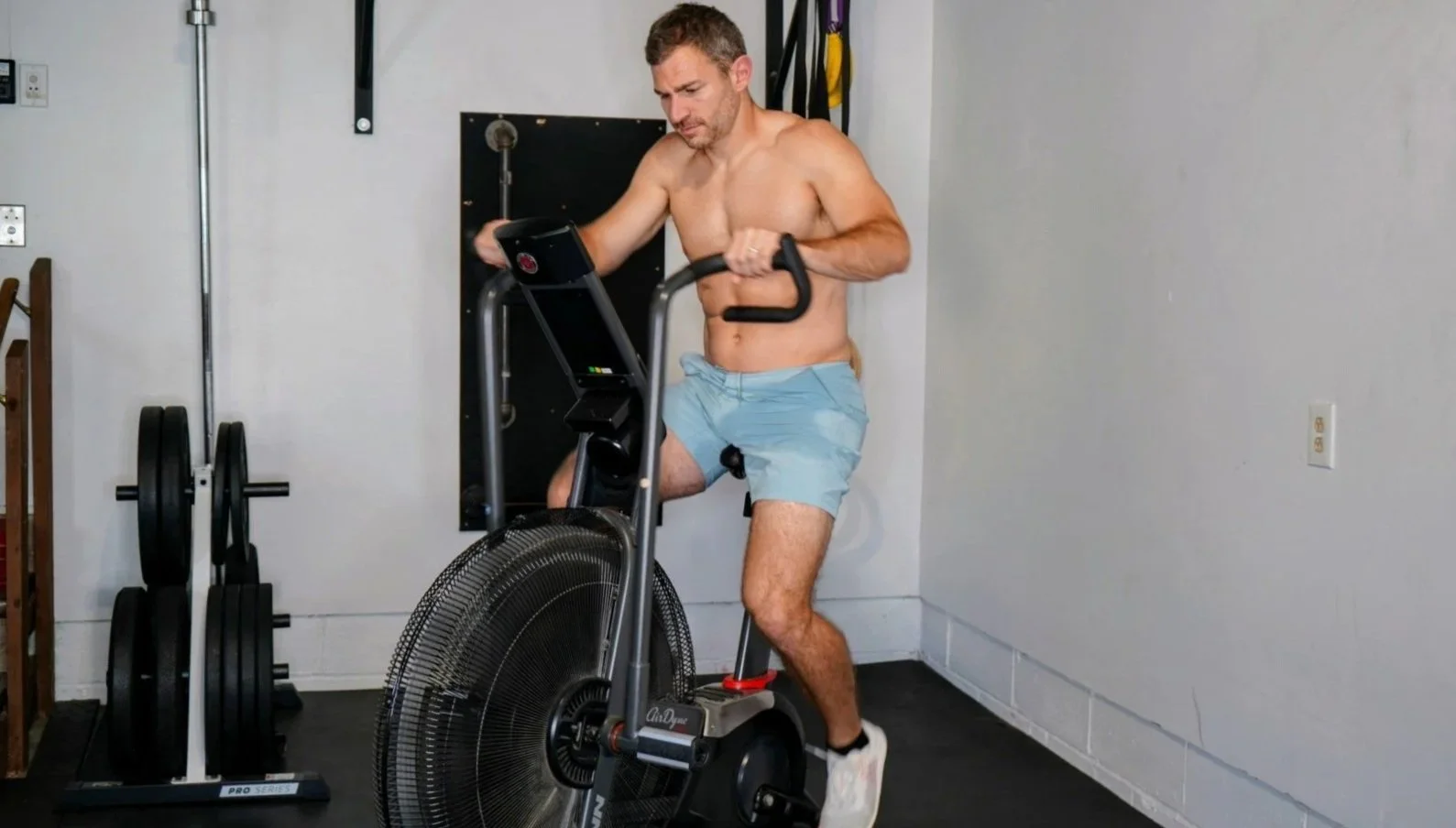
If your job or sport tests VO2 max on a bike, you need to train that modality. Shifting to bike-specific VO2 intervals five to six weeks before your test will dramatically improve your score and your performance.
How To Estimate vVO2 Max Without a Lab Test
If you want a practical, real-world way to measure VO2-level fitness, skip the lab and use performance.
You have three good options:
Use a Daniels VDOT calculator
Estimate vVO2 max as one hundred twelve to one hundred fifteen percent of your threshold pace
Perform a 10 minute all-out time trial
Whatever pace or power you can hold for ten minutes without collapsing is an excellent estimate of your VO2 output.
This method is simple, reliable, and incredibly useful for athletes.
Can Circuit Training Improve VO2 Max?
Short answer: almost never in a meaningful way.
Most circuit workouts hit muscular failure before your aerobic system reaches its limit. The cycle rate is too slow, and the heart rate spike usually comes from muscular occlusion, positional stress, or hormonal response—not true oxygen demand.
You might see a tiny bump from circuit training, but nothing compared to proper aerobic modalities like:
Running
Cycling
Rowing
Cross-country skiing
Elliptical training
SkiErg
If you want real VO2 max improvements, use tools designed for it.
Why Your VO2 Max Goes Down on Long Runs (Hint: It Doesn’t)
One of the biggest questions I get as a coach is, “Why does my VO2 max drop after long easy runs?”
The short answer: your VO2 max isn’t dropping. Your watch is confused.
Wearables estimate VO2 max based on:
Heart rate
Pace or power output
Body weight
Algorithmic assumptions
During longer easy runs, your heart rate naturally drifts higher due to form breakdown, muscular fatigue, heat, hydration changes, or running on uneven terrain. When your watch sees your heart rate climbing while your pace stays slow, it assumes:
“Your fitness must be worsening.”
It’s not.
It’s just an oversimplified equation making a bad guess.
Running on dirt or trails can also lower your VO2 score by two to three points because traction and energy return are worse. Again, the watch thinks you’re working “harder than you should” at a given pace, so it downgrades you.
Your physiology didn’t change.
The algorithm misread the context.
How To “Hack” Your VO2 Max Score on Your Watch
I’m not recommending this, but you should understand how easy it is to manipulate your wearable:
End your session with about ten minutes of work above Zone 2.
That’s it.
Your watch sees:
High power
High output
Lower-than-expected heart rate
and immediately upgrades your VO2 max.
This is why you should never let a smartwatch determine your training intensity or fitness level.
Final Takeaway: Stop Chasing the Number and Start Training Smarter
Your VO2 max is a helpful indicator, but it’s not the holy grail. It doesn’t define your health or your athletic ability, and it absolutely doesn’t determine your worth as an athlete.
Focus on what matters:
Consistent training
Smart intervals
Sustainable intensity
Long-term aerobic development
Good movement patterns
Better habits
Because the truth is simple:
The person with the best engine wins, not the best number on their watch.
Last but not least..
I put together a free Balance and Stability Ebook designed to help you improve your balance in just minutes a day. It is the perfect companion to running training and will help you move with confidence. If you want a free copy of my new Ebook just fill out the short form below and I’ll send a copy to your email.
Thanks for taking the time to read my article.
-Patrick